
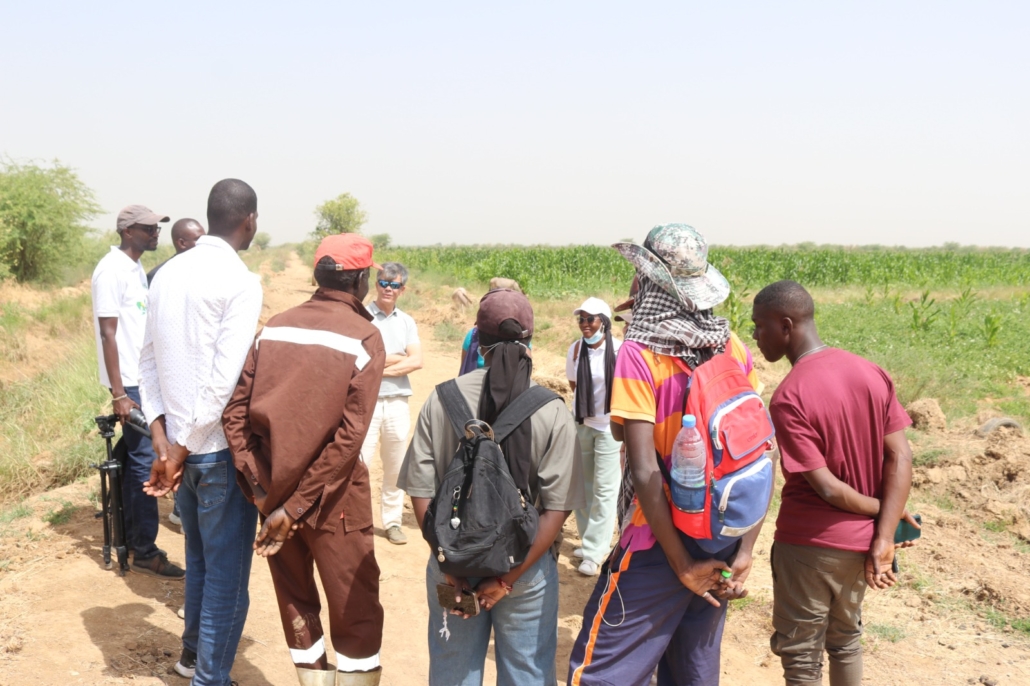
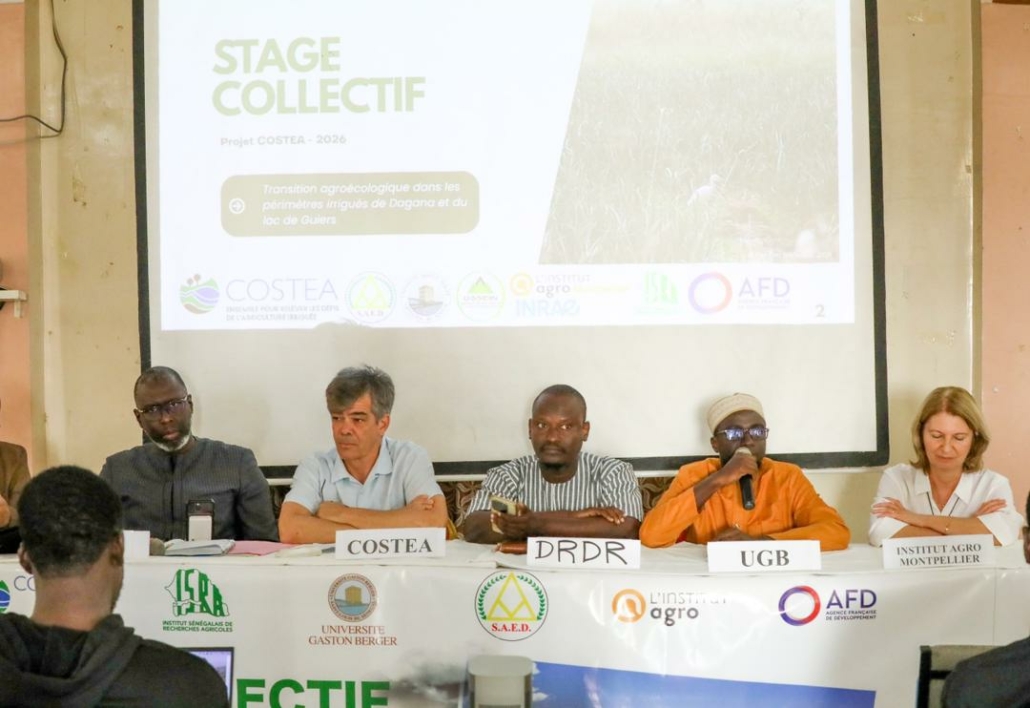
In the Senegal River Delta, a collective dynamic has recently been set in motion around the challenges of irrigation and agroecological transition. At the initiative of COSTEA, a collective field workshop brought together students, researchers, and institutional actors for a week around a common goal: understanding field realities to better support the transformation of irrigated systems.
This initiative is part of a structuring approach by COSTEA: bridging the perspectives of science, the field, and public action. Specifically, it mobilizes students at the end of their curriculum from L’Institut Agro Montpellier and Gaston Berger University, alongside national technical partners such as SAED (National Society for the Development and Exploitation of Land in the Senegal River Delta and the Senegal and Falémé River Valleys) and ISRA (Senegalese Institute of Agricultural Research).
Immersion at the heart of irrigated regions
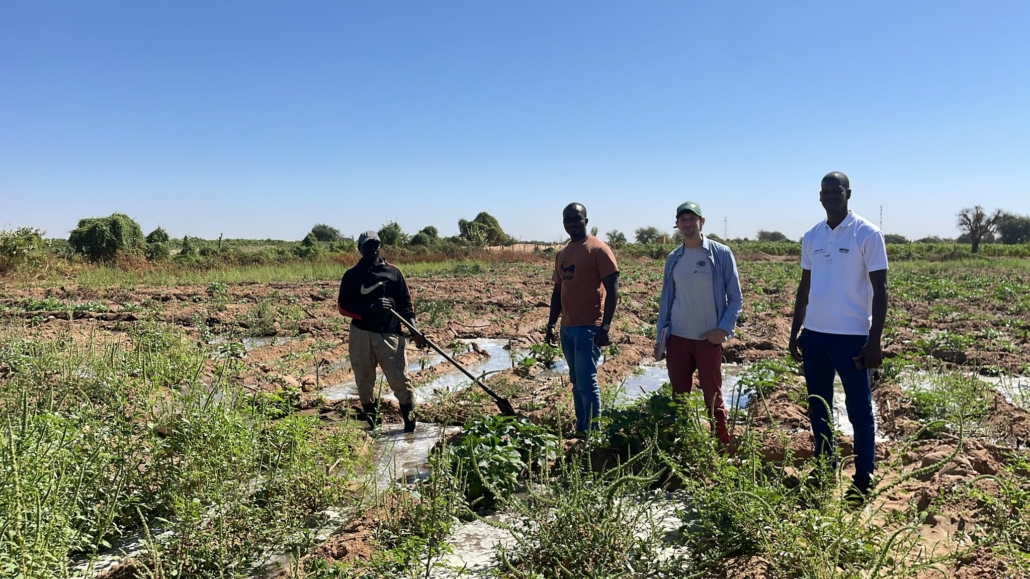
During this week of fieldwork in the Saint-Louis region, the teams conducted an in-depth diagnostic of several irrigation schemes, notably in Dagana and around Lake Guiers.
Objective: analyze agricultural practices, water management methods, hydraulic development choices, as well as the economic and social dynamics at work.
This work made it possible to identify contrasting situations:
- old schemes undergoing rehabilitation, structured around collective gravity-fed networks
- more recent areas, where irrigation practices are more individual and less regulated
Beyond infrastructure, the entire territorial system was examined: stakeholder organization, rules de gestion de water, integration into agricultural value chains, or even the evolution trajectories of farms.
Lessons for thinking about the agroecological transition
The results of this workshop constitute a first step in a broader study led by COSTEA on the re-engineering of irrigation schemes, the next phase of which will begin in April in Senegal. This study will also be conducted in Cambodia, one of the 8 COSTEA member states.
The diagnostic carried out during this week of fieldwork has already allowed for the selection of the areas that will be involved in this study: Dagana A, Dagana B, Mbilor, Keur Mbaye, and Lake Guiers.
These results highlight several key lessons:
- the need to link hydraulic infrastructure and agricultural practices
- the importance of social and organizational dimensions in water management
- the role of local areas as the relevant scale for thinking about the agroecological transition
The data collected will feed into both future COSTEA studies and the design of professional training dedicated to these issues.
Without being limited to an academic approach, this initiative generated notable interest at the local level. The diversity of stakeholders involved (ISRA, SAED, UGB, Institut Agro) and the visibility of the project testify to a shared need: to better understand the transformations underway in irrigated regions.
This resonance is not only due to the production of knowledge, but to the method itself—a collaborative approach, rooted in practice and oriented towards action-oriented.
A COSTEA approach: connecting scales to transform
Through this type of initiative, COSTEA affirms its positioning: producing useful knowledge, rooted in field realities, to inform public decisions and support the transformation of irrigated agriculture in the face of climate challenges.
This approach is part of COSTEA’s general mission, which organizes think tanks, field expertise, cross-sectoral feedback, and training on four main themes:
- agroecological re-engineering and the management of collective irrigated systems
- wastewater reuse for agriculture
- mitigating the impact of irrigated agriculture on climate change
- territorial, participatory, and inclusive water governance
Thinking about irrigation today is no longer limited to technical choices. It is about designing systems capable of integrating territorial dynamics, environmental constraints, and the needs of local stakeholders—within a perspective of sustainability and food security.
These discussions will be addressed during a specific workshop next June in Senegal, which will involve experts from the WA-NIMAS (West African Network of Irrigation Management Authorities), a major player in irrigation in West Africa.
Created in 2013, COSTEA is a think tank dedicated to water for food in the face of climate change challenges. It brings together an international community of reflection and action consisting of experts, scientists, agricultural water managers, contracting authorities, public officials, and technical and financial partners. It aims to produce, share, and promote knowledge and public policy recommendations to meet the challenges of irrigated agriculture.