
In the Senegal River Valley, irrigation is at the heart of agricultural, economic, and territorial dynamics. Faced with the climate challenge, a conviction is gradually taking hold: transforming irrigated systems can no longer be addressed through siloed approaches.
It is with this perspective that COSTEA initiated an original group internship program for agronomy students in Senegal. Beyond its pedagogical dimension, this internship is part of a deeper dynamic: that of an ecosystem of actors structuring themselves around a common goal—reinventing irrigation to serve agroecology at the territorial scale.
A format that has become a strategic lever and an approach that renews knowledge production methods
Initially envisioned as a pedagogical opportunity, the group internship quickly established itself as a strategic tool for COSTEA.
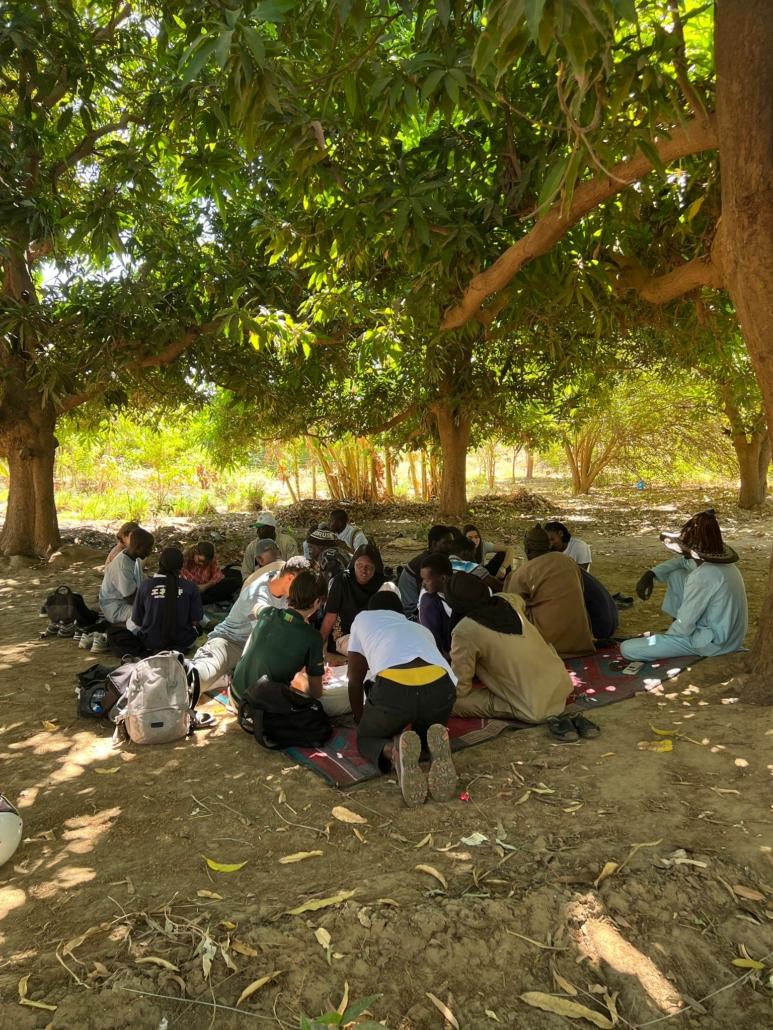
For one month, nearly 50 Senegalese students from Gaston Berger University and international students from Institut Agro Montpellier were mobilized in an intensive program consisting of: an academic preparation phase, two weeks of field surveys, and a reporting and production phase.
This hybrid format makes it possible to simultaneously address three structural challenges, moving beyond a strictly technical reading of irrigation to fully integrate agroecology issues:
- training a new generation of professionals
- producing empirical knowledge on a large scale
- informing, in the long term, reflections on public policies
With 10 survey groups deployed simultaneously in the field, the collected data offers a detailed and grounded reading of agricultural realities—closely reflecting farmers’ practices and water management challenges.
What distinguishes these internships from classic expertise lies in the very nature of the program. Here, the long-term duration, the intensity of collective work, and the diversity of the profiles involved allow for:
- combining academic, technical, and empirical perspectives,
- introducing analytical approaches derived from agrarian systems,
- bringing to light new questions, raised by profiles that are not yet formatted by traditional thinking
COSTEA, a catalyst for an ecosystem of actors
At the heart of this dynamic, COSTEA plays a key role: that of facilitator and connector.
The internship helped federate actors, strengthening interactions between:
- SAED, a key operator in irrigated development, heavily involved in logistics and technical supervision
- ISRA, which is strengthening its work on the agroecology of irrigated systems;
- Gaston Berger University and Institut Agro Montpellier, brought together for the first time around a common training program.
This coordination, from preparation to reporting, has structured an unprecedented dialogue between academic institutions, research, and operational actors; one of the major contributions of the program lies in its ability to create lasting links.
The interactions established during the internship now constitute a foundation for COSTEA’s next steps:
- mobilizing actors in the study on the agroecological re-engineering of irrigated schemes, which starts in April
- increased involvement of partners in training programs
- structuring a network of experts at the West African scale.
This continuity will notably materialize during a regional workshop scheduled for June 2026 in Senegal, bringing together experts from West African development companies.
Key lessons for the agroecological transition
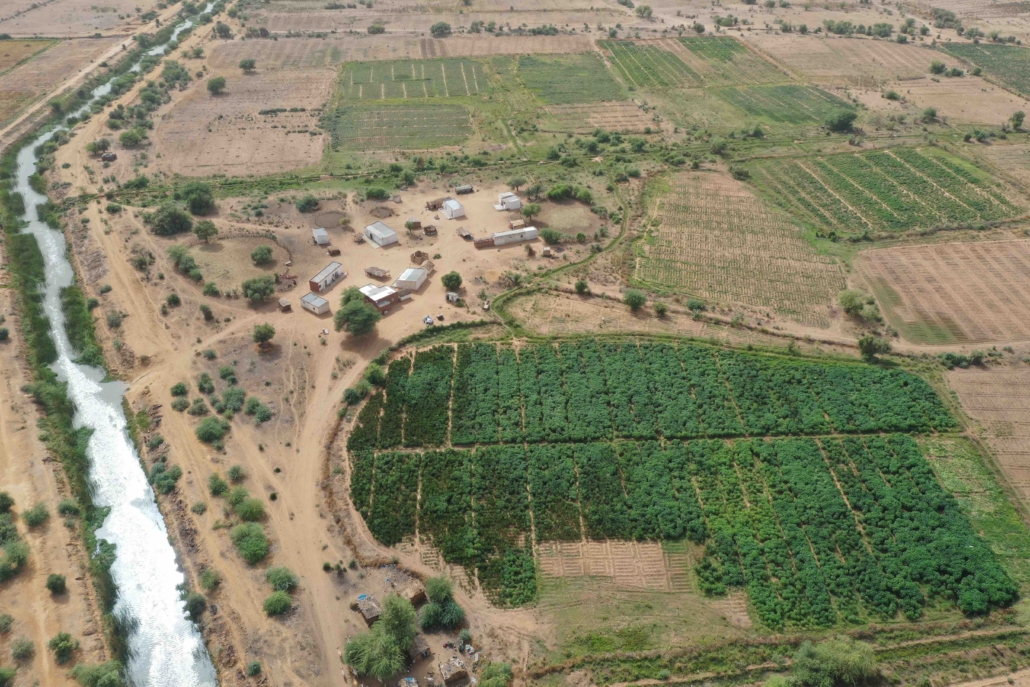
The diagnosis carried out on the Dagana and Lake Guiers schemes highlights several major lessons that will inform a broader reflection on the conditions for an agroecological transition adapted to irrigated systems:
- Empowering farmers in water management
A lever identified to improve system resilience, while raising the question of the role of technical operators in infrastructure management and maintenance. - Diversification of cropping systems
Already present in the field, diversification opens up perspectives for moving away from rice monoculture and integrating agroecological practices. - Crop-livestock integration
A key path for strengthening the sustainability of production systems. - The central role of women
Despite limited access to land, women’s collective dynamics—notably through cooperatives grouping several thousand female farmers—appear as a strategic lever for transformation.